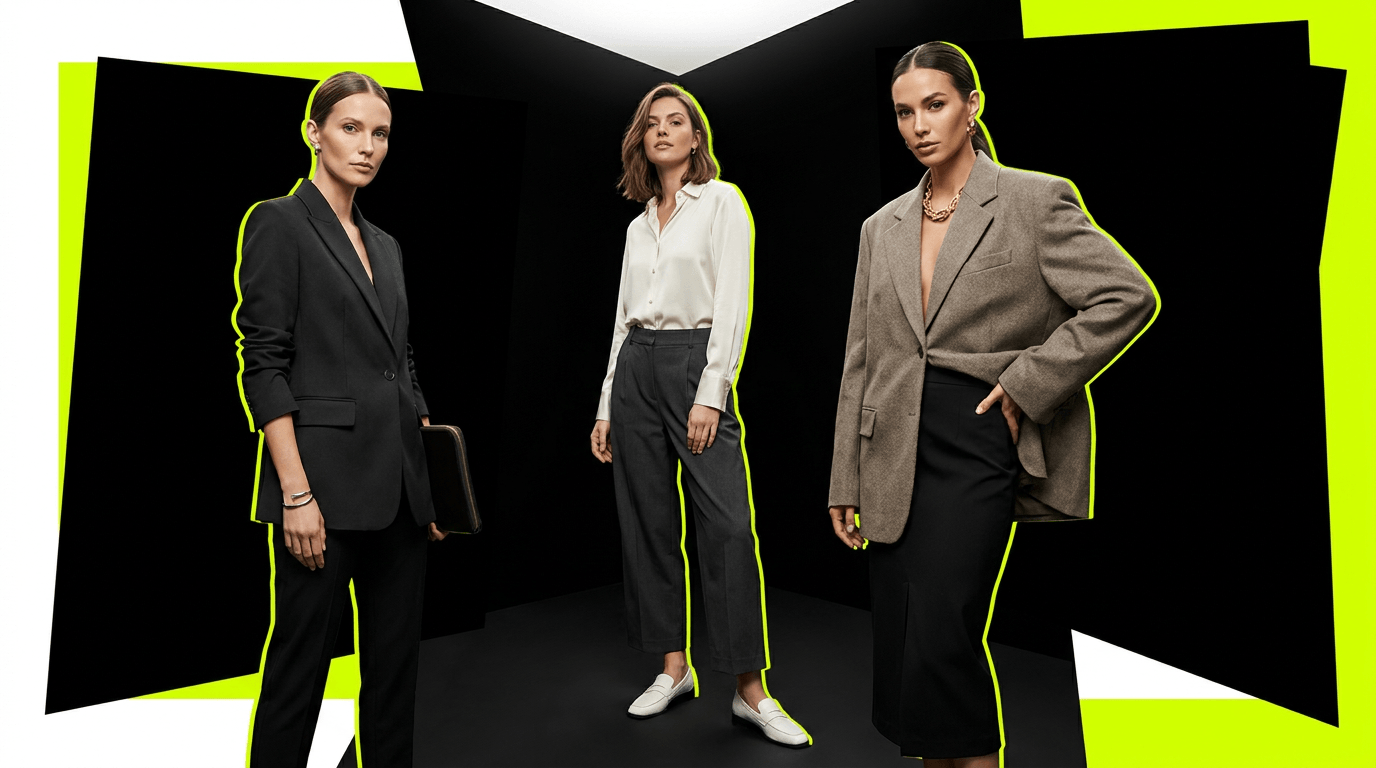
You have roughly seven seconds to make a first impression before your interviewer has already started forming an opinion. Your words, your qualifications, and your experience all matter deeply — but your outfit is the very first thing anyone sees. Choosing the right interview outfit is not about dressing to impress in a generic sense; it is about showing that you understand the industry, respect the company culture, and carry yourself with confidence. And that calculus looks very different depending on whether you are walking into a law firm, a design studio, a hospital, or a tech startup.
This guide breaks down exactly what to wear to a job interview as a woman, organized by industry, so you can stop second-guessing your closet and start focusing on what actually matters: landing the role. Whether you need to nail a power suit for a finance interview or find that perfect balance of creative and polished for a media agency, we have got you covered. We also share how Alvin's Club can take the guesswork out of building your perfect interview look before you even open your closet door.
Why Your Interview Outfit Matters More Than You Think
Dressing for an interview is not vanity — it is strategy. Research consistently shows that a significant portion of hiring managers factor appearance into their hiring decisions, even when they are consciously trying not to. Your outfit signals how seriously you have taken the opportunity, how well you understand professional norms, and whether you have done your homework on the company culture. In other words, the right look is an extension of your preparation.
Beyond the impression you make on others, what you wear has a direct effect on how you feel. When a woman feels genuinely good in what she is wearing, that confidence comes through naturally in her posture, her voice, and her presence. Wearing an outfit that fits well and aligns with the environment gives you one less thing to worry about so you can focus entirely on the conversation. Think of your interview outfit as part of your preparation toolkit, not an afterthought.
Before You Dress: How to Read the Room
Before reaching into your wardrobe, take 15 minutes to research the company. Scroll through their LinkedIn, Instagram, and website to pick up visual cues about how employees dress on a daily basis. If you can find photos from company events or office tours, even better. From there, the widely accepted rule is simple: dress one level above the everyday standard. If employees wear jeans and tees, arrive in tailored trousers and a blouse. If they wear business casual, wear a blazer and polished separates. If they wear suits, wear a high-quality suit with refined accessories.
If you are still unsure after your research, it is always safer to be slightly overdressed than underdressed. A well-tailored blazer and smart trousers can work in almost any setting, and you can always remove a blazer to dress the look down if needed. The goal is to appear polished, prepared, and culturally aware — all before you say a single word.
Tools like the Outfit Journal feature on Alvin's Club can help you plan and visualize your interview look in advance, pulling together curated outfit suggestions based on the occasion so you are never standing in front of your closet paralyzed the night before a big day.
Finance, Law & Consulting: Business Formal Done Right
Industries like banking, investment, law, and consulting have maintained a strong culture of formal dressing, and that expectation extends to interviews. These environments value authority, precision, and professionalism, and your outfit should communicate all three. A sharp, well-fitted suit remains the gold standard here, whether you prefer a pantsuit or a skirt suit. Stick to classic, authoritative colors: black communicates leadership, navy signals trustworthiness, and charcoal grey offers a polished middle ground.
Underneath your blazer, choose a crisp, light-colored blouse in white, cream, or soft blue. Pair the look with closed-toe heels or elegant flats in a coordinating neutral tone. Accessories should stay minimal and intentional — a structured leather tote or briefcase, small pearl or stud earrings, and a classic watch are all you need. Avoid bold patterns, statement jewelry, or anything that could be considered distracting. In these industries, the suit does the talking.
- Best colors: Black, navy, charcoal, and deep grey
- Key pieces: Tailored pantsuit or skirt suit, crisp blouse, closed-toe pumps or flats
- Accessories: Structured tote or briefcase, simple jewelry, a classic watch
- Avoid: Bold prints, loud colors, excessive jewelry, open-toe shoes
Tech & Startups: Smart Casual with a Modern Edge
Tech companies and startups operate in a different cultural universe from Wall Street. Many embrace relaxed, casual dress codes day-to-day, which means showing up in a full suit can actually work against you by signaling that you misread the culture. That said, an interview is still a formal occasion, and showing up in the company-wide hoodie-and-jeans combo is not the answer either. The sweet spot is smart casual: think elevated basics that feel current and intentional without being stiff.
A great option is a well-fitted blazer worn over a neat blouse or a quality knit top, paired with tailored dark trousers or dark-wash jeans. A stylish jumpsuit in a solid, muted color also works well here. Footwear can lean more relaxed than in corporate settings — ankle boots, loafers, or sleek flat sandals all read as polished in a tech environment. The key is that every piece should look chosen and intentional rather than thrown together.
- Best colors: Dark neutrals, muted tones, with a subtle pop of color in a top or accessory
- Key pieces: Blazer over a knit top or blouse, tailored trousers or dark jeans, a stylish jumpsuit
- Accessories: A modern tote or structured backpack, minimal jewelry, clean sneakers or loafers
- Avoid: Full formal suiting, overly stiff silhouettes, high heels that feel out of place
If you want to see how a blazer-and-trouser combo actually looks on your own frame before committing, the Celebrity Try-On feature on Alvin's Club lets you virtually try on complete looks from style icons to see exactly how different cuts and silhouettes work on your body in real time.
Creative Industries: Polished with Personality
When you are interviewing for a role in advertising, graphic design, marketing, fashion, or media, your outfit is more than just a formality — it is part of your portfolio. Hiring managers in creative fields expect candidates to have a point of view, and a completely neutral, safe outfit can actually undercut your candidacy by suggesting a lack of creative confidence. This does not mean anything goes, but it does mean you have room to bring something personal to the look.
Consider a tailored blazer in an interesting color or texture worn over a refined top, paired with wide-leg trousers or a chic midi skirt. A printed blouse with solid trousers is another strong option — it shows creative sensibility while keeping the silhouette grounded. Statement accessories like bold earrings, a distinctive handbag, or a patterned scarf can elevate a simpler outfit without overwhelming it. The goal is a look that says: "I understand aesthetics, I have taste, and I can still walk into a client meeting."
- Best colors: Rich jewel tones, warm neutrals, muted brights, interesting prints
- Key pieces: Blazer in a bold or textured fabric, wide-leg trousers, printed blouse, midi skirt
- Accessories: Statement earrings, a distinctive bag, a thoughtful scarf or belt
- Avoid: Head-to-toe neutrals that read as generic, overly casual pieces, anything unfinished or wrinkled
Want to explore how a high-fashion creative look translates to your own figure without the designer price tag? The Affordable Dupes feature on Alvin's Club uses image recognition to surface budget-friendly alternatives to premium pieces, so you can achieve a polished, creative look without stretching your budget.
Healthcare & Education: Professional and Approachable
Healthcare and education share a common professional value: trust. Whether you are interviewing for a nursing role, a physician position, a teaching job, or an administrative role in a hospital or school, the people hiring you need to believe that you will be competent, responsible, and approachable. Your outfit should reinforce all of those qualities. Business casual with a formal lean tends to work very well in both environments.
For healthcare interviews, a well-fitted pair of tailored dress pants or a knee-length skirt paired with a collared blouse and a neat blazer strikes the right balance. Avoid scrubs at an interview — even if you will wear them on the job every day, the interview is a separate context and should reflect your professional polish, not your work uniform. For education roles, a blazer worn over a sweater and dress pants or a modest wrap dress communicates both authority and warmth. A muted color palette with one understated statement piece, like a silk scarf or a delicate necklace, adds personality without distraction.
- Best colors: Navy, taupe, soft grey, muted pastels, classic white
- Key pieces: Blazer over a blouse or collared top, tailored trousers or knee-length skirt, modest wrap dress
- Accessories: Small stud earrings, a structured bag, sensible closed-toe shoes or low block heels
- Avoid: Scrubs, overly casual tops, bold patterns, very high heels
Hospitality & Retail: Brand-Aware and Put-Together
In hospitality and retail, your appearance during an interview is itself a preview of how you will represent the brand to guests and customers. Companies in these sectors are particularly attuned to presentation, grooming, and how well a candidate understands their brand aesthetic. Before choosing your outfit, spend time looking at the brand's visual identity — how do their in-store teams dress? What is the overall vibe of the brand, whether it is luxury, contemporary, or casual?
For a high-end hotel or luxury retail brand, lean toward polished business casual or even business formal: a tailored dress with a structured blazer, or sleek trousers with an elegant blouse and closed-toe heels. For a more casual retail environment, smart casual works well — neat dark trousers or a tidy midi skirt, a pressed blouse, and clean, simple shoes. In both cases, impeccable grooming matters just as much as the outfit itself. Nails should be clean, hair should be neatly styled, and clothing should be wrinkle-free.
Use the Brand Look feature on Alvin's Club to browse curated looks from popular fashion brands and virtually try them on before you shop, so you can see exactly how a Zara blazer or an H&M tailored dress looks on your body before you commit to a purchase.
Government & Non-Profit: Classic and Conservative
Government agencies and many non-profit organizations tend to maintain traditional dress code expectations, particularly for formal or leadership roles. These environments value substance and reliability, and your outfit should project exactly that. Err on the side of classic and conservative — a well-cut suit or tailored dress in a neutral palette is always a safe and confident choice.
A tailored navy or charcoal pantsuit with a clean blouse, or a structured knee-length dress in a muted tone, communicates seriousness and respect for the institution. Keep accessories understated: a simple pendant necklace, small earrings, and a structured leather bag are all you need. This is not the setting for bold fashion moments, but it is absolutely a setting where quality tailoring and a polished finish will make a lasting impression.
- Best colors: Navy, charcoal, black, muted taupe, soft white
- Key pieces: Classic pantsuit or skirt suit, structured knee-length dress, tailored blazer
- Accessories: Simple jewelry, structured bag, closed-toe pumps or elegant flats
- Avoid: Trendy or fashion-forward pieces, bold patterns, overly casual separates
Universal Tips That Apply to Every Industry
Regardless of which industry you are interviewing in, a few ground rules apply across the board. Following these ensures that no matter how different your target company culture is from another, your outfit will always work in your favor.
- Fit is everything. A perfectly tailored affordable piece will always look better than an expensive item that does not fit. Make sure you can sit, stand, and move comfortably without adjusting your clothes.
- Stick to neutral foundations with personal accents. Build your look around navy, black, grey, or taupe, then add a subtle pop through a blouse color or a single accessory.
- Press and lint-roll your outfit the night before. Wrinkles and pet hair can immediately undermine an otherwise polished look.
- Keep fragrance minimal. A light application of perfume is fine; anything overpowering can be distracting and some interviewers may have sensitivities.
- Grooming completes the outfit. Clean, well-styled hair, subtle makeup, and tidy nails signal that you pay attention to detail in every aspect of your presentation.
- Wear it before the interview day. If the outfit is new, try it on and walk around at home first. You want to be sure you feel confident and comfortable, not self-conscious about a waistband or an unfamiliar heel height.
Staying up to date on what is actually trending in professional dressing also helps you make confident choices. The Trend Feed on Alvin's Club aggregates real-time global street style and emerging fashion movements, so you can see what polished, modern professional dressing looks like right now — not five years ago.
What to Wear for Virtual Interviews
Virtual interviews have become a standard part of the hiring process across almost every industry, and the same rules of dressing intentionally still apply. Even though the interviewer may only see you from the shoulders up, what you wear affects your mindset, your posture, and the overall impression you project on screen. Dress fully for the role, head to toe, because it genuinely changes how you carry yourself.
On camera, solid colors tend to photograph better than busy patterns, which can create visual noise and distract from your face. Aim for slightly more color contrast than you might wear in person, since cameras can wash out subtle tonal differences. A structured, collared or V-neck top in a rich color — think burgundy, deep cobalt, or classic ivory — tends to read beautifully on screen. Make sure your background is clean and well-lit, and check your appearance in the camera view before the call begins. The same industry-specific guidelines above all apply: a virtual interview at a law firm calls for the same level of polish as an in-person one.
Dress with Intention, Walk in with Confidence
The perfect interview outfit is not about wearing the most expensive clothes or following every micro-trend. It is about demonstrating that you understand the environment you are stepping into, that you respect the opportunity in front of you, and that you feel genuinely confident in your own skin. By tailoring your look to your specific industry and doing a little research on the company culture beforehand, you set yourself up to walk into any room — or log into any video call — feeling exactly like the right person for the job.
And if building that outfit feels overwhelming, you do not have to figure it out alone. From visualizing how different looks work on your body to finding affordable alternatives to high-end pieces, Alvin's Club is designed to make the process intuitive, personalized, and actually enjoyable. Your dream role deserves your best look — and now you have a clear roadmap to find it.
Build Your Perfect Interview Outfit with Alvin's Club
Try on complete looks virtually, find smart dupes for designer pieces, and get personalized outfit inspiration tailored to your body and your goals — all in one place.
Download the Alvin's Club App