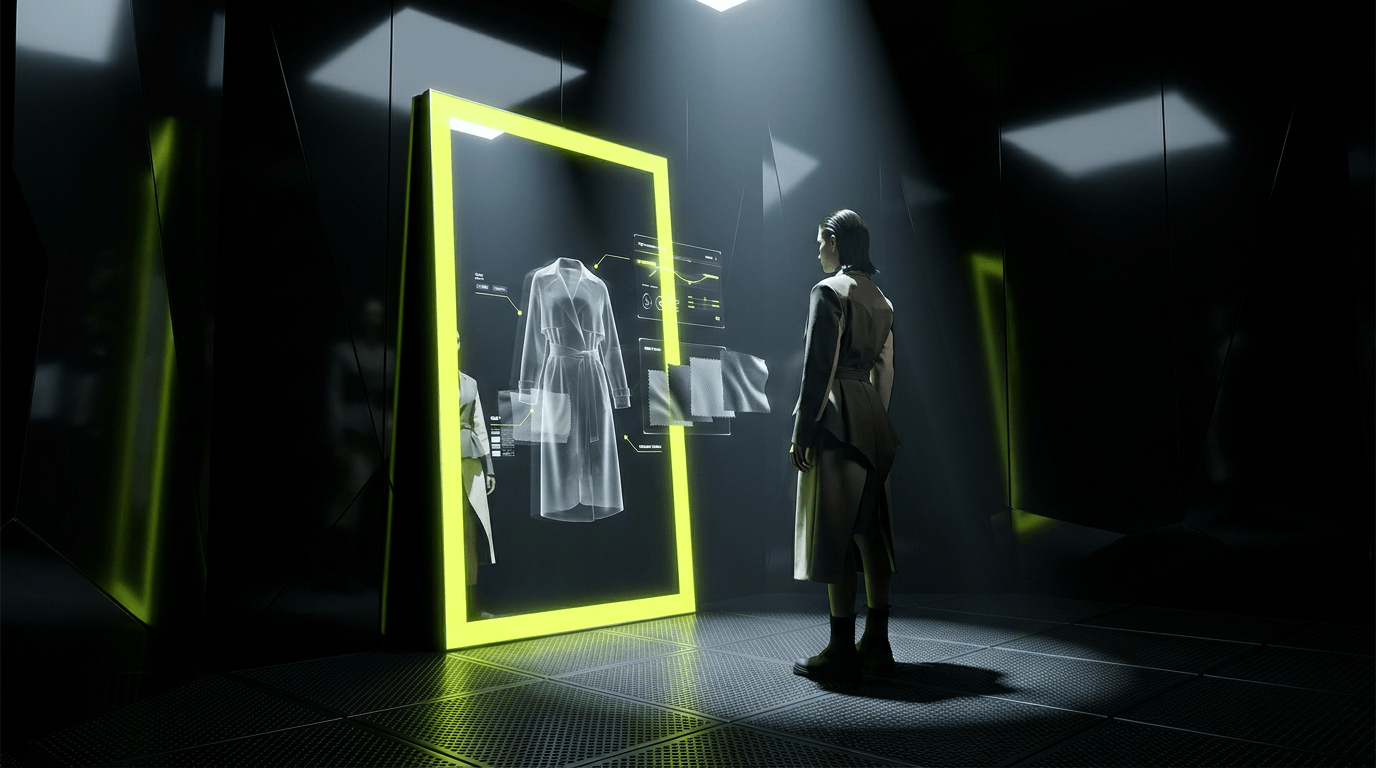
Picture this: you walk into a fitting room, hold a dress up to the mirror, and without ever pulling it over your head, the mirror shows you exactly how it looks on your body — in three different colors, with two alternative skirt lengths, and paired with shoes you spotted on the shelf two aisles back. No wrestling with zippers. No waiting in a queue. No disappointing surprises under fluorescent lighting.
This is not a scene from a futuristic concept store. Virtual mirror technology is already reshaping how people shop for clothes, and the pace of change is accelerating fast. Smart mirrors powered by augmented reality (AR), artificial intelligence (AI), and computer vision are moving from experimental retail pilots into mainstream fitting rooms around the world. At the same time, mobile-first platforms are taking the same technology out of brick-and-mortar stores entirely and putting it directly in shoppers' hands.
In this article, we break down how virtual mirror tech works, what it means for the in-store experience, why it matters for your wallet and your wardrobe, and how the next generation of AI fashion tools is making the fitting room concept smarter, more personal, and more accessible than ever before.
What Is Virtual Mirror Technology?
Virtual mirror technology refers to interactive display systems that use cameras, sensors, and software to digitally overlay clothing, accessories, or styling options onto a real-time image of the user. In a retail setting, this typically means a large touchscreen or reflective display installed in or near a fitting room. In a digital context, it means an app or web tool that maps garments onto a photo or live video feed of the shopper.
The core idea is straightforward: eliminate the gap between seeing a garment on a hanger and imagining how it will look on your actual body. That gap is responsible for enormous amounts of shopper frustration, decision fatigue, and ultimately, returned merchandise. Virtual mirrors close it using a combination of body-mapping algorithms, 3D garment rendering, and real-time image processing.
While the concept has been explored since the early 2010s, the technology has matured significantly in recent years. Better computer vision models, faster processors, and higher-resolution displays have brought virtual mirrors from clunky novelty to genuinely useful retail tool. Today, major fashion retailers, luxury brands, and tech-forward startups are all investing in this space.
How Smart Mirrors Actually Work in Fitting Rooms
A smart mirror in a physical fitting room is essentially a large display layered over or integrated into a reflective surface. Cameras embedded in the frame capture the shopper's image in real time, while depth sensors — similar to those used in gaming systems — map the three-dimensional contours of the body. That spatial data allows the software to accurately drape and size digital garments onto the shopper's silhouette.
From there, the software does several things simultaneously. It adjusts the garment's proportions to match the detected body shape, simulates how different fabrics would move and hang, and renders the result in real time so the shopper sees a seamless composite image rather than a jarring overlay. More advanced systems can also account for lighting conditions in the store, making the digital try-on look believable rather than obviously synthetic.
The interactive layer is where smart mirrors become genuinely powerful. Shoppers can typically:
- Browse and select garments without leaving the fitting room
- Switch between color and fabric variations instantly
- Request different sizes and have staff notified automatically
- See product details, reviews, and styling suggestions on the same screen
- Save or share their look via email, QR code, or social media
Some systems also integrate with loyalty programs and purchase history, allowing the mirror to make personalized recommendations based on what a customer has bought or browsed before. This transforms the fitting room from a passive utility into an active, data-informed personal styling experience.
How Smart Mirrors Are Transforming the Retail Experience
The traditional fitting room model has significant inefficiencies baked into it. A shopper might carry ten items into a cubicle, try on three before losing patience, and leave with one — or nothing. Staff spend time retrieving sizes that don't fit. Popular items pile up on the returns rack rather than back on the floor. The whole process is time-consuming for everyone involved.
Smart mirrors address these friction points in measurable ways. Retailers who have deployed the technology report that fitting room conversion rates — the percentage of try-ons that result in a purchase — increase substantially. When shoppers can visualize more options without the physical effort of changing clothes, they explore more of the range and feel more confident in their choices. Reduced friction at the point of decision leads to fewer abandoned try-ons and more completed purchases.
Beyond conversion, smart mirrors generate a rich stream of behavioral data. Retailers can see which items get virtually tried on most, which color switches are most common, and where shoppers drop off in the decision process. This information is genuinely valuable for merchandising, inventory planning, and marketing. In that sense, the smart mirror is not just a customer-facing experience tool — it is also a sophisticated retail analytics platform.
Luxury brands have been particularly aggressive in adopting the technology as a way to extend their service ethos. A smart mirror that suggests complementary pieces, remembers a customer's past purchases, and allows seamless communication with a stylist on the floor mirrors the white-glove experience these brands are known for, while making it scalable across more locations and customer touchpoints.
Key Benefits for Shoppers
From a consumer perspective, smart mirrors solve a genuinely annoying problem: the disconnect between aspiration and reality in fashion shopping. That problem exists whether you are shopping in a flagship store or scrolling an app at midnight. Virtual mirror technology reduces it by letting you see rather than imagine.
Here are the most tangible benefits shoppers experience:
- Faster decision-making: Visualizing multiple options quickly reduces the time spent in indecision.
- Greater confidence: Seeing how a garment actually looks on your body shape before buying removes a major source of purchase anxiety.
- Fewer returns: When shoppers know what they are getting, they are far less likely to send it back. Studies consistently show return rates drop significantly with virtual try-on adoption.
- More creative exploration: It is easier to experiment with styles outside your comfort zone when the risk of being stuck half-dressed in a small cubicle is removed.
- Better styling outcomes: Integrated recommendation engines help shoppers put together complete looks they might not have considered on their own.
These benefits compound over time. Shoppers who use virtual try-on regularly develop a more accurate mental model of what works for their body, which makes every subsequent shopping experience faster and more satisfying. The technology is not just a novelty — it is genuinely building better shopping intuition.
Challenges and Limitations of In-Store Smart Mirrors
For all their promise, in-store smart mirrors are not without real-world limitations. The hardware is expensive to install and maintain, which puts it out of reach for many smaller or mid-market retailers. A high-quality smart mirror setup for a single fitting room can run tens of thousands of dollars, and scaling that across dozens of locations requires significant capital investment.
The technology also has to clear a fairly high bar to be convincing. Shoppers are accustomed to seeing themselves in actual mirrors, so a virtual overlay that looks slightly off — wrong sizing, poor fabric simulation, unnatural movement — can feel worse than no technology at all. Getting the rendering quality right requires continuous software updates and a substantial catalog of accurately digitized garments, which means ongoing cost and effort on the retailer's part.
There are also privacy considerations. Smart mirrors that capture video and body data raise legitimate questions about what that data is stored, for how long, and how it might be used. Transparency and opt-in consent are essential, and retailers that handle this poorly risk damaging trust with exactly the customers they are trying to delight.
Finally, smart mirrors only help shoppers who are already in the store. They do nothing for the enormous and still-growing segment of fashion retail that happens entirely online. That is where mobile-first virtual try-on technology becomes the more important innovation.
Virtual Try-On Beyond the Store: The Mobile Revolution
The most significant development in virtual mirror technology over the past few years is not what is happening inside retail stores — it is what is happening on people's phones. Mobile AI has advanced to the point where the core fitting room experience can be replicated with nothing more than a smartphone camera and a well-trained neural network. This is the frontier where the most exciting innovation is taking place.
Platforms like Alvin's Club represent this next generation of virtual try-on. Rather than requiring a trip to a physical store with a smart mirror installed, users simply upload a photo of themselves and can instantly see how real outfits look on their actual bodies. The technology maps garment geometry, color, and drape onto the user's silhouette with the kind of accuracy that was impossible just a few years ago.
What makes this especially compelling is the breadth of what you can try on. Want to see how Zendaya's latest red carpet look would translate to your frame? Alvin's Club makes that possible through its Celebrity Try-On feature, which lets you virtually step into complete outfits from style icons before you commit to buying anything similar. This is virtual mirror technology at its most aspirational — and its most practical.
The platform also addresses one of the most common frustrations in fashion: loving a high-end look but not having a high-end budget. After trying on a luxury-inspired outfit, the Affordable Dupes feature automatically surfaces smart, budget-friendly alternatives to designer pieces using image recognition — so you can achieve the aesthetic without the eye-watering price tag. Return rates drop by 25 to 48 percent when shoppers use this kind of AI-powered try-on before purchasing, which means fewer regretted purchases and less wasted money.
For shoppers who struggle with wardrobe paralysis — that familiar feeling of standing in front of a full closet and seeing nothing to wear — the platform's Outfit Journal and personalized OOTD recommendations provide daily inspiration tailored to the season, upcoming holidays, and items already in the user's virtual closet. And a real-time Trend Feed aggregates global street style to keep users ahead of emerging fashion movements without having to scroll endlessly through social media.
For those who love shopping specific brands, the Brand Look feature curates complete looks from fast-fashion favorites like Zara and lets users try them on virtually in seconds — turning the brand's entire catalog into a personal fitting room that fits in your pocket.
The Future of Fitting Rooms
The trajectory of virtual mirror technology points toward a world where the distinction between physical and digital fitting rooms dissolves almost entirely. In-store smart mirrors will get lighter, cheaper, and more accurate as display hardware improves and AI model costs continue to fall. More retailers will adopt them not as luxury differentiators but as standard fixtures — the way touchscreen point-of-sale systems replaced cash registers.
At the same time, mobile virtual try-on will become the default first step for most fashion purchases. Before a shopper walks into a store or adds something to an online cart, they will have already seen how it looks on their body. The try-on happens at home, on the commute, wherever the shopping impulse strikes. The physical store becomes the place you go to confirm a decision already made, rather than the place you go to figure out what you want.
AI will also make the experience increasingly personalized. Future fitting rooms, whether physical or digital, will know your body proportions, your color preferences, your style history, and your budget. They will not just show you how a garment looks — they will tell you whether it is actually your style, whether it works with what you already own, and where to find it for less if the price is too high.
This convergence of hardware, AI, and behavioral data is transforming fashion retail from a guessing game into something much more precise and satisfying. The fitting room that once felt like a fluorescent-lit gamble is becoming a genuinely intelligent, personalized experience — and the best versions of it now fit right in your pocket.
The Mirror Has Changed — And So Has the Way We Shop
Virtual mirror technology is not a gimmick or a distant retail concept. It is already here, already changing how people discover, evaluate, and buy clothing — and it is improving faster than most shoppers realize. Whether it shows up as a sleek touchscreen in a flagship store fitting room or as an AI-powered app on your phone, the core promise is the same: see it on yourself before you buy it, and shop with real confidence rather than crossed fingers.
The shift from physical smart mirrors to mobile-first virtual try-on is particularly significant because it democratizes the experience. You no longer need to visit a store with the right technology installed. The fitting room comes to you, and the intelligence behind it gets sharper every day. For shoppers who want to look great, waste less money, and make better decisions about what they wear, that is a genuinely exciting development.
Try the Future of Fashion Shopping — On Your Phone, Right Now
Why wait for a smart mirror to show up in your local fitting room? Alvin's Club puts AI-powered virtual try-on, celebrity outfit inspiration, personalized OOTD recommendations, and smart dupe-finding directly in your hands. Upload a photo, try on the looks you love, and shop with the kind of confidence that used to require a very good fitting room — or a very good stylist.
Download the App and Start Trying On Looks Today