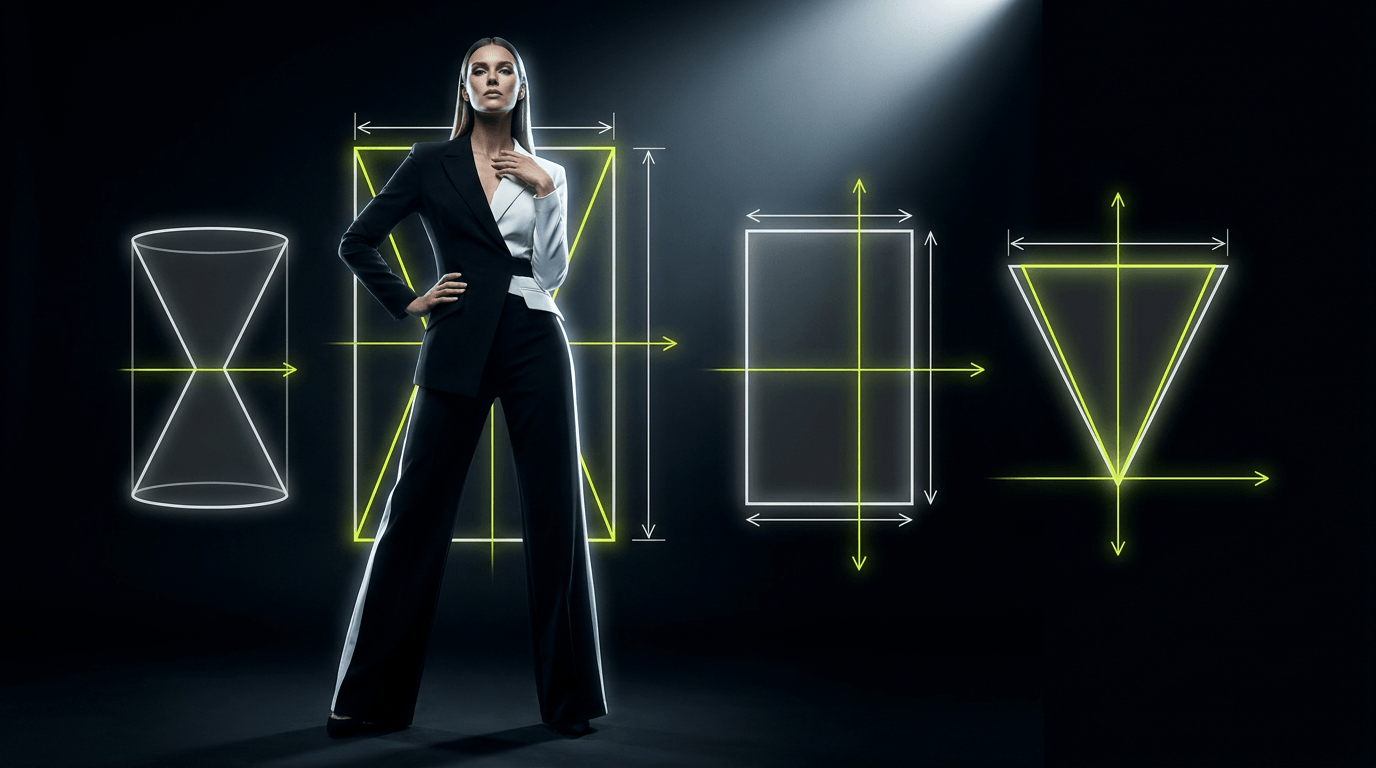
You've probably spent more than a few minutes standing in a fitting room, holding up a pair of trousers or a blazer, wondering why something that looked perfect on the hanger feels completely off on your body. The truth is, it's not your body that's the problem — it's the mismatch between the garment's cut and your unique proportions. That's exactly where a body shape calculator changes everything.
In just 60 seconds and three simple measurements, you can unlock a whole new level of clarity about how to dress in a way that genuinely flatters you. No more guesswork, no more returns, no more standing in the mirror feeling defeated. This guide walks you through how to find your body shape accurately, what each shape means for your wardrobe, and how to use that knowledge to build outfits you actually feel great wearing — with a little help from AI along the way.
What Is a Body Shape and Why Does It Matter?
Your body shape is simply a way of describing the overall silhouette formed by the relationship between your shoulders, bust, waist, and hips. Unlike clothing size — which tells you how much fabric you need — your body shape tells you which cuts, silhouettes, and proportions will work with your natural structure rather than against it. Think of it as the blueprint that helps you decode why a wrap dress fits beautifully on one person and falls flat on another, even when they wear the same size.
Understanding your body shape isn't about fitting yourself into a rigid box or conforming to some arbitrary beauty ideal. It's a practical styling tool. When you know your shape, you can stop second-guessing every purchase and start shopping with intention. You'll know which waistlines to look for, which necklines open up your frame, and which hemlines create the most balanced look for your proportions. The result? More confident choices and fewer items gathering dust at the back of your wardrobe.
How to Take Your Measurements (The Right Way)
Before you run your numbers through a body shape calculator, you need accurate measurements. Grab a flexible fabric measuring tape (the kind used in sewing), stand naturally without sucking in your stomach, and take the following three measurements while wearing form-fitting clothing or underwear:
- Bust: Measure around the fullest part of your chest, keeping the tape parallel to the floor.
- Waist: Measure around the narrowest part of your torso, usually about an inch above your belly button. Don't pull the tape tight — you want a natural, comfortable fit.
- Hips: Measure around the widest part of your hips and seat, typically 7–9 inches below your natural waistline.
Write these numbers down in inches or centimeters — consistency matters, so stick to one unit. Some calculators also factor in shoulder width for greater precision, so you can measure across the back from shoulder point to shoulder point if you'd like a more detailed result. With those numbers in hand, you're ready to calculate.
The Body Shape Calculator: How to Find Your Shape in 60 Seconds
The logic behind most body shape calculators is straightforward: they compare your bust, waist, and hip measurements to identify where your proportions fall and which classic silhouette they most closely resemble. Here's how to do it yourself right now:
- Calculate your waist-to-hip ratio – Divide your waist measurement by your hip measurement. A ratio of 0.75 or below generally indicates a defined waist relative to hips.
- Compare bust and hips – Are they within an inch of each other, or does one significantly outmeasure the other? This distinction separates hourglass and pear shapes from inverted triangles.
- Assess your shoulder line – Are your shoulders wider, narrower, or roughly equal to your hips? This is the key variable for identifying an inverted triangle shape.
- Check your waist definition – Is your waist measurement at least 9 inches smaller than your bust and hips (classic hourglass), or is it within a few inches of both (rectangle)?
Once you've run through these comparisons, match your results to the body shape descriptions below. Most people find they sit clearly in one category, though it's completely normal to feel like you share characteristics with two shapes — in that case, choose the one that best describes where your body carries the most volume.
The 5 Main Body Shapes Explained
Hourglass
The hourglass shape is characterized by bust and hip measurements that are roughly equal, paired with a noticeably narrower waist — typically a difference of 9 inches or more. This creates a symmetrical, curved silhouette that is often considered the "easiest" to dress because it already has built-in definition. The key is simply to highlight what's already there: fitted silhouettes, wrap styles, and belted pieces all work beautifully. Avoid oversized or boxy shapes that mask your waist, and be mindful of anything too clingy around the hips, which can feel restrictive rather than flattering.
Pear (Triangle)
If your hips are noticeably wider than your bust — usually by two or more inches — you have a pear or triangle shape. This is one of the most common body shapes, and it means your proportions are bottom-heavy in the best possible way: your hips and thighs carry more volume, while your shoulders and upper body are narrower. The classic styling goal here is to draw the eye upward and create visual balance. Statement tops, structured shoulders, and bold necklines all help broaden the upper body, while A-line skirts and wide-leg trousers flow gracefully over the hips without adding bulk. Dark wash or monochromatic bottoms can also help create a streamlined look below the waist.
Apple (Round)
Apple shapes carry more weight through the midsection, with shoulders and hips that are roughly similar in width and a waist that is wider rather than defined. The torso tends to be the widest part of the silhouette. The most flattering approach for apple shapes is to create length through the torso and draw attention toward the legs and décolletage. Empire waistlines, V-necklines, and flowy fabrics that skim rather than cling are your best friends. High-waisted trousers and skirts can help elongate the midsection, while avoiding anything that cinches tightly at the widest point of the stomach. Vertical stripes and monochromatic outfits also create a wonderfully elongating effect.
Rectangle (Straight)
Rectangle or straight body shapes have bust, waist, and hip measurements that are all fairly similar, with minimal waist definition. The silhouette is athletic and linear rather than curvy. Far from limiting, this shape is incredibly versatile — it can carry off oversized, structured, and draped silhouettes with ease. The styling opportunity here is to create the illusion of curves and definition where you want them: peplum tops, ruffled skirts, and belts worn at the natural waist all add dimension. Layering is your secret weapon, as it creates visual depth and breaks up the straight line of the torso. Bold prints and textured fabrics also add the kind of visual interest that gives the rectangle shape an effortlessly dynamic look.
Inverted Triangle
The inverted triangle shape features shoulders that are noticeably wider than the hips, often with a broader chest and a narrower lower body. This silhouette is common among athletic builds and those with broad, defined shoulders. The styling philosophy is the reverse of the pear: you want to add volume below the waist and soften the shoulder line. Wide-leg trousers, full skirts, and A-line hemlines help balance out the upper body, while avoiding boat necks, cap sleeves, or heavily padded shoulders that exaggerate the width. Deep V-necks and scoop necklines elongate the upper torso, and wrap skirts in bold prints draw the eye downward beautifully.
Styling Tips for Every Body Shape
Knowing your shape is step one. Translating that knowledge into actual outfits is where most people stall. Here are the universal principles that apply across all body shapes and that the best fashion stylists rely on every day:
- Fit over size: A well-fitted garment in a larger size will always look better than something in a smaller size that pulls or gaps. Never let the number on the label influence your choice.
- Color and contrast: Darker colors recede visually and create a slimming effect, while lighter colors and bold prints advance and add volume. Use this strategically for different parts of your body.
- Proportion and balance: If you wear something voluminous on top, keep the bottom streamlined, and vice versa. Balance is what creates a polished, intentional look.
- Fabric matters: Structured fabrics like denim, wool, and ponte hold their shape and define silhouette; flowy fabrics like chiffon and silk drape softly and skim the body. Match the fabric weight to the effect you're going for.
- Vertical lines elongate: Whether it's pinstripes, a long pendant necklace, or an open-front cardigan, vertical lines draw the eye up and down, making the body appear taller and more streamlined.
These rules are not rigid laws — they are starting points. Once you understand why they work, you can break them intentionally and with confidence. Style is ultimately about self-expression, and the best outfits are the ones that make you feel most like yourself.
Beyond the Calculator: Try Before You Buy
Understanding your body shape theoretically is useful, but seeing how a specific garment or outfit actually looks on your body before you buy it? That's a game-changer. This is exactly where Alvin's Club steps in with technology that makes trying on clothes smarter, faster, and more personalized than anything a fitting room can offer.
With Alvin's Club's Celebrity Try-On feature, you can upload your own photo and instantly see how complete looks from style icons like Zendaya, Dua Lipa, or Timothée Chalamet would look on your actual body — not on a model with a different shape than yours. You'll immediately see whether a particular silhouette flatters your proportions or whether you need to try a different cut. It removes all the uncertainty that typically turns shopping into a stressful guessing game. Try it on the app and experience the difference in real time.
Already found a look you love from Zara or another fast-fashion brand but not sure how it will translate to your shape? Alvin's Club's Brand Look feature lets you browse curated looks from your favorite brands and virtually try them on before adding anything to your cart — drastically cutting down on returns and buyer's remorse. And if you love the aesthetic of a luxury piece but not the price tag, the app's Affordable Dupes tool surfaces smart alternatives that capture the same vibe at a fraction of the cost.
For days when you know your shape but still can't figure out what to wear, Alvin's Club's Outfit Journal and wardrobe inspiration feature delivers personalized OOTD recommendations tailored to your shape, your existing virtual closet, the season, and even upcoming holidays. And if you want to make sure your shape-flattering choices are also on-trend, the Trend Feed aggregates the latest global street style so you're always ahead of what's emerging rather than chasing what's already peaked.
Frequently Asked Questions
Can my body shape change over time?
Yes, absolutely. Your body shape can shift due to weight changes, hormonal fluctuations, pregnancy, aging, or changes in muscle mass from exercise. It's a good idea to re-measure yourself every 6–12 months, especially if your clothing fit has changed noticeably. Your shape is not fixed — and your styling approach can evolve alongside it.
What if I don't fit neatly into one category?
That's more common than you might think. Most body shape calculators present five categories, but real bodies exist on a spectrum. If your measurements suggest you're between two shapes — say, a pear with more defined shoulders — take styling tips from both categories and experiment with what works for your specific proportions. Use the shapes as a guide, not a rigid classification.
Does height affect which body shape category I fall into?
Height doesn't change your body shape category, but it does influence which styling rules apply. Petite figures with pear shapes, for instance, benefit from high-waisted pieces to elongate the legs, while tall pear shapes can afford to experiment with midi and maxi lengths more freely. Think of height as an additional layer of nuance on top of your shape category.
Are body shape rules mandatory, or can I ignore them?
They're tools, not rules. Understanding the principles helps you make faster, more confident decisions — but style is inherently personal, and breaking the "rules" with intention is often what creates the most memorable looks. Use the framework as a foundation and build your own aesthetic on top of it.
The Bottom Line
A body shape calculator is one of the most practical tools in any fashion-forward person's arsenal. In just 60 seconds and three measurements, you gain a clear framework for understanding your proportions, decoding which silhouettes flatter you most, and shopping with far more confidence and precision. Whether you're a classic hourglass, a beautiful pear, a bold inverted triangle, or anywhere in between, the right styling knowledge transforms the way you approach getting dressed every single day.
And when you're ready to take that knowledge from theory to real-life outfit decisions, technology like Alvin's Club bridges the gap between knowing your shape and seeing exactly how clothes will look on it — before you ever spend a cent. Because great style isn't about having the "right" body. It's about knowing yours.
Ready to See Your Shape in Action?
Stop guessing how clothes will look and start knowing. Upload your photo, try on celebrity styles, explore brand looks, and get personalized outfit inspiration built around your unique body shape.
Download Alvin's Club App — It's FreeVirtual try-on · Outfit inspiration · Smart dupes · Street style trends