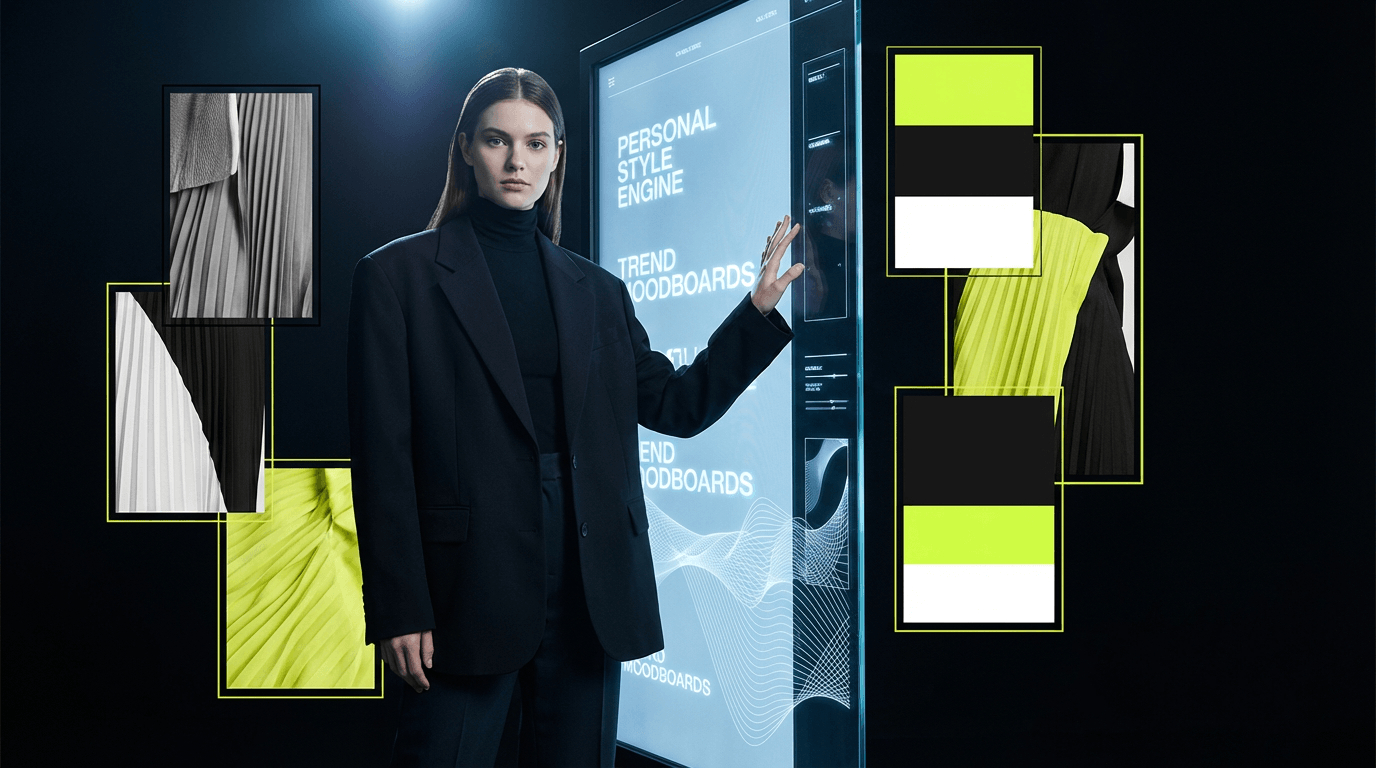
Most people don't struggle to find clothes. They struggle to find their clothes. You can spend an hour scrolling through Instagram, save fifty outfit photos, open your closet the next morning, and still feel like you have nothing to wear. The problem isn't a lack of options — it's a lack of clarity about what actually works for you. That's exactly the gap that style finder tools are designed to close.
Whether you're rebuilding your wardrobe from scratch, refining an aesthetic you already love, or just tired of expensive fashion mistakes, the right tools can help you cut through the noise and land on a look that feels genuinely, confidently yours. In this guide, we'll walk through how style finder tools work, what the AI-powered generation of them can do that older methods can't, and how platforms like Alvin's Club are making personal style discovery faster, smarter, and a lot more fun.
Why Finding Your Style Is Harder Than It Looks
Personal style sounds like it should come naturally. You see something you like, you buy it, you wear it. But the reality for most people involves a drawer full of impulse purchases, a few reliable standbys worn on repeat, and a vague sense that a more cohesive wardrobe is possible but somehow out of reach. Part of the difficulty is that style is deeply contextual. What looks incredible on a runway, a celebrity, or even a friend doesn't automatically translate to your body, your lifestyle, or your budget.
The other challenge is that personal style isn't static. It evolves with age, mood, career changes, and cultural shifts. A tool or process that helped you define your look at 22 might feel completely misaligned at 30. This is why the best style finder approaches aren't one-time quizzes — they're ongoing systems that adapt as you do.
What Is a Style Finder Tool?
A style finder tool is any resource, method, or platform designed to help you identify, define, and shop for a personal aesthetic. These tools can range from personality-based style quizzes to AI-powered virtual fitting rooms. At their best, they don't just tell you what's trending — they help you understand what you actually look and feel good in, and then make it easy to shop for exactly that.
The most effective style finders work across a few key dimensions:
- Discovery: Helping you identify aesthetics, silhouettes, and color palettes you're drawn to
- Visualization: Letting you see how looks translate onto your specific body before buying
- Curation: Surfacing pieces that match your defined style from across thousands of options
- Inspiration: Keeping you connected to evolving trends without overwhelming you
- Accessibility: Making it possible to achieve your desired aesthetic within your actual budget
The best modern tools address all five of these dimensions in one place, rather than forcing you to patch together a dozen different apps and Pinterest boards.
Classic Style Finder Approaches (And Their Limitations)
Before AI entered the picture, style discovery relied on a handful of well-worn methods. Style quizzes, for instance, ask about your lifestyle, body type, and aesthetic preferences, then assign you a label like "classic," "bohemian," or "minimalist." These can be a useful starting point, but they tend to oversimplify. Real personal style rarely fits neatly into a single archetype, and the recommendations they generate are often generic.
Pinterest mood boards are another popular approach. Saving images that resonate with you can absolutely help clarify your aesthetic instincts, but there's a significant gap between a curated board and knowing how to actually shop for those looks. Pinning a Celine outfit doesn't tell you where to find something similar for $60, and it doesn't tell you whether the silhouette will actually suit your frame.
Personal stylists solve both of those problems, but they're expensive and inaccessible to most people. Subscription styling boxes like Stitch Fix take a step toward personalization, but they still involve shipping, waiting, and returning items that don't work — a process that's more effort than most people want to invest on a regular basis.
How AI Style Tools Change Everything
AI-powered style tools collapse the gap between inspiration and decision-making. Instead of imagining how something might look on you, you can see it. Instead of wondering whether a trending silhouette suits your body type, you can test it in seconds. And instead of scrolling through thousands of products hoping something catches your eye, an AI assistant can surface exactly what matches your evolving aesthetic — in real time.
This shift matters because it removes the two biggest pain points in fashion discovery: uncertainty and wasted money. When you can try before you buy (virtually), you buy with more confidence and return far less. When the curation is personalized to your actual style profile rather than a demographic average, every recommendation feels relevant. AI doesn't just speed up the style-finding process; it makes the outcomes genuinely better.
Virtual Try-On: See It On You Before You Buy
Of all the tools available for style discovery, virtual try-on (VTO) technology is the most transformative. The ability to upload a photo of yourself and see — with realistic accuracy — how a specific garment looks on your body changes the entire fashion shopping dynamic. You're no longer guessing about fit, proportion, or color based on a model whose body looks nothing like yours. You're seeing yourself, styled.
Alvin's Club's virtual try-on feature takes this a step further by allowing you to try on complete outfits, not just individual pieces. This is crucial for style discovery because personal style is rarely about a single item in isolation — it's about how pieces work together as a system. Seeing a full look on your own body gives you a much more accurate read on whether it's actually your look. Studies and platform data suggest that this kind of virtual try-on reduces return rates by 25 to 48 percent, which speaks to how much more confident shoppers feel when they can visualize outcomes before committing.
Celebrity Style as a Starting Point, Not a Destination
Celebrity fashion is one of the most powerful sources of style inspiration — and one of the most frustrating, because it so rarely translates directly. You might love how Zendaya pulls off a structured blazer and wide-leg trousers, but when you try to recreate the look, something feels off. The problem is usually proportion: celebrity outfits are styled with specific bodies, heights, and contexts in mind, and those variables rarely match your own.
The solution isn't to stop drawing inspiration from celebrities — it's to use tools that let you try on celebrity outfits virtually, so you can see exactly how Dua Lipa's red carpet look or Timothée Chalamet's tailored suit translates to your specific body before you invest in anything. Alvin's Club has built this directly into its platform, with dedicated celebrity style sections that let you pull complete looks from today's most-followed icons and visualize them on yourself. This approach lets you use celebrity style as a calibration tool — keeping what works for your body and silhouette, leaving behind what doesn't.
Trend Feeds and Street Style: Staying Ahead Without the Scroll
One of the biggest challenges in developing personal style is staying connected to what's happening in fashion without drowning in content. The average person doesn't have time to monitor runway shows, street style accounts, and emerging trend reports across multiple platforms. But disconnecting entirely means missing the cultural shifts that influence what feels fresh versus dated.
A real-time trend feed aggregating global street style solves this by doing the curation work for you. Instead of stitching together inspiration from a dozen different feeds, you get a single, constantly updated stream of what's actually being worn in fashion-forward cities around the world. The key distinction between a trend feed and a standard social media scroll is intentionality — a good trend feed is organized around emerging movements, not engagement algorithms, so you're seeing what's genuinely gaining traction rather than what's been boosted by the platform.
Using a trend feed strategically means checking in regularly but briefly, identifying which directions feel aligned with your existing aesthetic, and using those insights to make targeted additions to your wardrobe rather than wholesale overhauls.
Smart Dupes: Luxury Aesthetic, Everyday Budget
One of the most persistent frustrations in personal style development is the gap between the aesthetic you're drawn to and what you can realistically afford. Loving the clean lines of Celine, the romantic embellishment of Valentino, or the structured elegance of Dior doesn't mean you have a designer budget. For most people, personal style has to be built on affordable foundations — which is where smart dupe-finding becomes a genuine style superpower.
This isn't about cheap knockoffs. It's about using image recognition technology to identify pieces that capture the essence of a luxury look — the silhouette, the color palette, the fabric weight — at a price point that actually makes sense for your life. When you find affordable alternatives to designer looks through AI-powered matching, you're not compromising on style; you're just shopping smarter. Alvin's Club automatically surfaces these alternatives after a virtual try-on, so the transition from "I love this look" to "here's how to get it within my budget" is nearly instant.
Your Outfit Journal: Solving Wardrobe Paralysis
Wardrobe paralysis — that frustrating feeling of standing in front of a full closet and seeing nothing to wear — is one of the most common style problems, and it's fundamentally a curation and organization issue rather than a shopping issue. Most people already own enough clothes; what they lack is a system for putting those clothes together in ways that feel intentional and inspired, rather than defaulting to the same five outfits every week.
A virtual wardrobe and personalized daily outfit inspiration tackles this directly. By logging your existing pieces and layering in AI-generated OOTD suggestions tailored to the season, upcoming events, and your defined aesthetic, you transform a static wardrobe into a dynamic toolkit. You stop thinking in terms of individual garments and start thinking in terms of complete looks — which is how people with genuinely great personal style actually operate. The seasonal dimension matters too: getting outfit suggestions that are calibrated to actual weather and cultural moments (holidays, events, seasonal transitions) means the inspiration is immediately actionable, not just aspirational.
How to Use Style Finder Tools Together for Maximum Impact
The most effective approach to style discovery isn't picking a single tool and hoping it does everything — it's building a small, integrated system where each tool reinforces the others. Here's a practical framework for how to use the available tools in sequence:
- Start with inspiration curation. Use a trend feed or street style source to identify the aesthetic directions you're currently drawn to. Don't over-analyze; just notice what consistently catches your attention over a week or two.
- Test with virtual try-on. Once you have a sense of the looks you like, use VTO to see them on your actual body. This filters out the pieces that look great in the abstract but don't translate to your proportions or coloring.
- Anchor to celebrity references. Use celebrity looks as specific, concrete style targets — then try them on virtually to see what works and adapt accordingly.
- Find your budget-aligned alternatives. Once you know what works on your body, use smart dupe tools to find pieces that deliver the same aesthetic at a price point that makes sense for your budget.
- Build your outfit journal. Log your best combinations, keep seasonal inspiration flowing, and revisit your virtual wardrobe regularly to make sure you're actually wearing what you own in new, creative ways.
This kind of layered approach turns style discovery from a vague aspiration into a repeatable, confidence-building practice. You're not just finding pieces you like — you're developing an instinct for what works for you, which compounds over time.
Platforms like Alvin's Club are uniquely positioned in this space because they bring all of these layers together under one roof. The celebrity try-on, the Brand Look sections for fast-fashion discovery across retailers like Zara, the trend feed, the smart dupes, and the outfit journal are all connected — so your style profile gets sharper with every interaction, and the recommendations get better the more you use it.
Conclusion: Your Style Is Already There
The most important thing to understand about personal style is that you're not building it from nothing — you're uncovering it. The aesthetic that resonates with you, the silhouettes that make you feel like yourself, the color combinations that light you up: those instincts already exist. Style finder tools don't create your look; they help you see it clearly, test it honestly, and shop for it smartly.
Whether you're just starting the discovery process or looking to refine something you've been developing for years, the combination of virtual try-on, trend awareness, smart budget alternatives, and personalized outfit inspiration gives you everything you need to close the gap between the style you admire and the style you actually live in. The tools are better than they've ever been — and they're only getting smarter.
Ready to Find Your Look?
Stop guessing and start seeing. Alvin's Club brings together virtual try-on, celebrity style inspiration, smart dupes, and personalized outfit suggestions in one AI-powered platform — so you can discover, test, and shop your personal style with total confidence.
Download the App and Start Your Style Journey