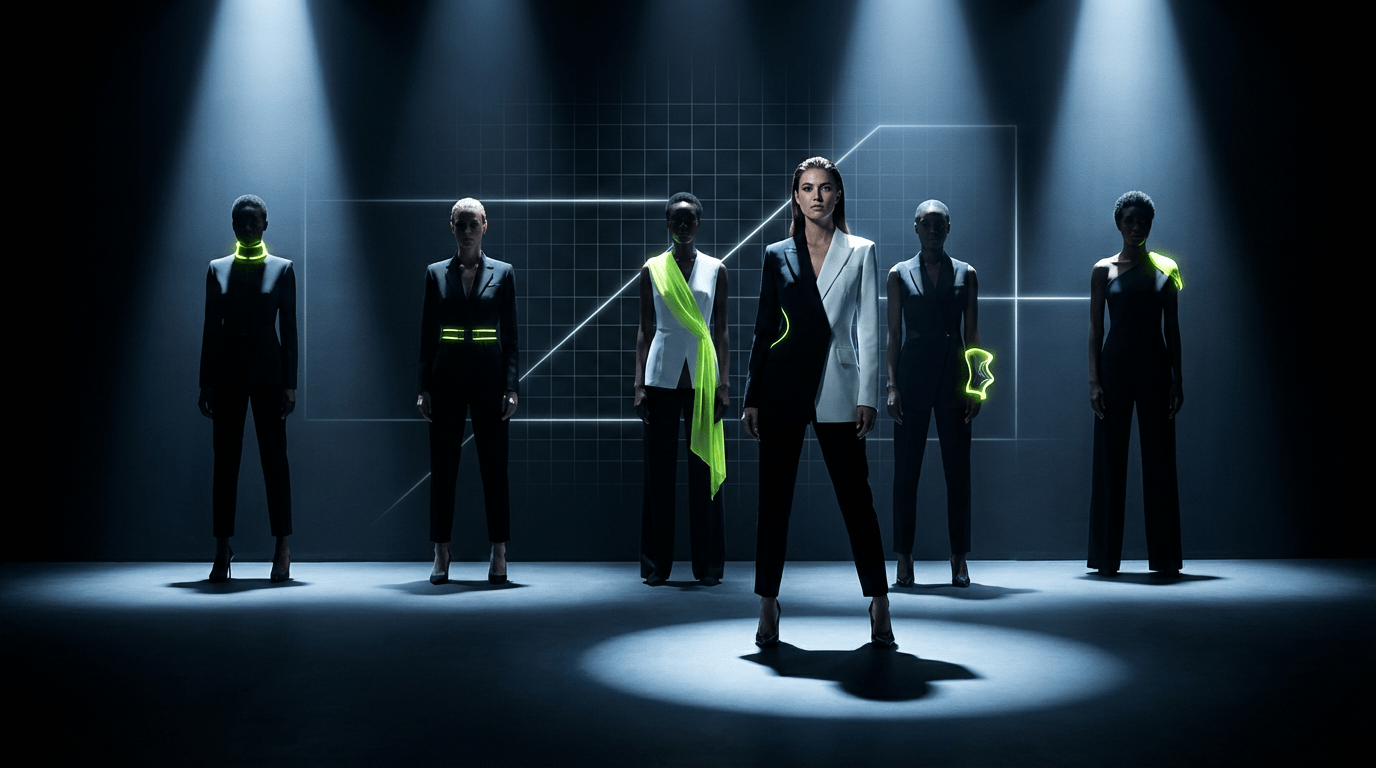
If you've ever stood in front of a packed wardrobe feeling like nothing fits quite right — not your body, but your essence — the Kibbe body type system might be exactly what you've been missing. Unlike conventional sizing charts or the apple-pear-hourglass framework most of us grew up with, the Kibbe system looks at the whole picture: your bone structure, your flesh (how soft or firm your natural silhouette is), and your facial features, all working together to define your unique Image Identity.
Developed by stylist David Kibbe in his 1987 book Metamorphosis, the system originally identified 13 distinct types, organized into five families. It's been experiencing a major cultural revival thanks to fashion communities on TikTok, Reddit, and YouTube, where enthusiasts spend hours analyzing celebrity Kibbes and debating whether Audrey Hepburn was truly Flamboyant Gamine or simply a Gamine. The conversation is lively, nuanced, and genuinely useful — because when you understand your Image Identity, getting dressed stops being a guessing game.
This guide breaks down all 13 Kibbe body types in plain, practical language. Whether you're brand new to the system or deep in the rabbit hole, you'll leave with a clear understanding of each identity, how to find yours, and how to translate it into a wardrobe that actually works for you.
What Is the Kibbe Body Type System?
The Kibbe system is a style philosophy built on the idea that every person has a natural Image Identity — a combination of physical traits that, when honored in clothing choices, creates a harmonious, flattering, and authentic look. David Kibbe argues that fighting your natural lines (trying to look taller when you're petite, or sharper when you're naturally soft) is what leads to that persistent feeling of clothes wearing you instead of the other way around.
What makes Kibbe different from traditional body shape frameworks is its holistic approach. It doesn't just measure your waist-to-hip ratio. It considers the sharpness or bluntness of your bone structure, the softness or firmness of your flesh, and even the quality of your facial features — whether they read as sharp, delicate, bold, or soft. These three dimensions combine to place you within one of five families, each with specific sub-types, for a total of 13 Image Identities.
The History Behind the System
David Kibbe published Metamorphosis in 1987, but the system's roots go even deeper, drawing on theatrical costume theory and the idea that clothing should work with a person's natural energy rather than impose an external ideal onto them. For decades, the book existed primarily as a niche collector's item, photocopied and passed between fashion enthusiasts. Then social media happened.
The Kibbe revival of the 2020s transformed the system into a full-blown online subculture. Style communities began typing celebrities — Cate Blanchett as Dramatic, Marilyn Monroe as Romantic, Audrey Hepburn as Flamboyant Gamine — and the framework clicked for millions of people who had always felt mislabeled by conventional body type advice. David Kibbe himself has become more active online, refining and updating his guidance, including simplifying the system for modern audiences by emphasizing line, silhouette, and overall impression over rigid measurements.
The Five Kibbe Families Explained
Before diving into each individual type, it helps to understand the five parent families. Every Image Identity belongs to one of these groups, and the family tells you the dominant energy of the type.
- Dramatic: Sharp, angular, elongated. The dominant quality is bold structure.
- Natural: Blunt, broad, slightly irregular. The dominant quality is an easy, unconstructed ease.
- Classic: Balanced and symmetrical. Neither extreme sharpness nor extreme softness.
- Gamine: A mix of sharp and delicate, small-scale and high-contrast. The dominant quality is youthful, bright energy.
- Romantic: Soft, rounded, lush. The dominant quality is femininity and curve.
Within each family, the sub-types reflect either a pure expression of that energy or a blending of two adjacent energies — for example, a Soft Dramatic leans Dramatic but has significant Romantic softness layered on top. Understanding the families first makes the individual types much easier to absorb.
All 13 Kibbe Image Identities
1. Dramatic
The Dramatic is the most extreme yang (sharp, angular) type in the system. Dramatics tend to have long, narrow bone structure with angular facial features — think strong jawlines, high cheekbones, and a lean silhouette regardless of weight. They thrive in sleek, structured, high-fashion clothing: sharp tailoring, long vertical lines, minimal ornamentation. Oversized florals or heavily draped, romantic fabrics can overwhelm the Dramatic's precise natural lines. Celebrities often typed as Dramatic include Tilda Swinton and Cate Blanchett.
2. Soft Dramatic
The Soft Dramatic carries the same elongated, angular bone structure as the Dramatic but adds a layer of lush, voluptuous softness in the flesh. The result is a bold, glamorous silhouette — think powerful structure draped in curves. Soft Dramatics look stunning in opulent fabrics, dramatic necklines, and flowing but structured garments. Jennifer Lopez and Salma Hayek are frequently cited examples. The key is keeping the scale large and the drama high while allowing for soft, sensual fabric choices.
3. Natural
The Natural type has a blunt, broad, slightly irregular bone structure that resists fussiness. Naturals tend to look best in relaxed, unconstructed clothing — think loose knits, straight-leg trousers, effortless layers, and earthy textures. Too much formality or extreme tailoring can make a Natural look stiff and uncomfortable. The goal for this type is elegant ease rather than precision.
4. Flamboyant Natural
The Flamboyant Natural is the most yang Natural sub-type, with a tall, broad, and slightly angular frame. They carry more sharpness than the pure Natural but still retain that blunt, unconstructed quality. Flamboyant Naturals look incredible in bold, oversized silhouettes — wide-leg trousers, strong-shouldered jackets, and geometric patterns all work beautifully. Think of the kind of effortless cool that looks like they grabbed things from a rack without trying. Amazonian and striking in stature, this type commands presence naturally.
5. Soft Natural
The Soft Natural blends the Natural's blunt ease with a layer of Romantic softness. They're typically moderate in height with a slightly curved silhouette and soft facial features. Flowing, easy silhouettes work best — think boho-chic, soft wrap dresses, and unstructured blazers worn open over a relaxed tee. Over-tailoring or over-formalizing the look tends to feel off for this type. Sandra Bullock is a commonly cited Soft Natural.
6. Classic
The Classic is the balanced center of the Kibbe system — neither strongly yang nor strongly yin, with symmetrical bone structure, moderate proportions, and neither particularly soft nor angular features. Classics look polished and put-together in tailored, symmetrical pieces: knee-length skirts, structured blouses, clean-lined blazers. They're the embodiment of timeless elegance, and over-trendy or eccentric styling often feels at odds with their natural harmony.
7. Dramatic Classic
The Dramatic Classic leans toward the yang side of Classic — a little sharper, a little more angular, with a slightly more elongated frame than the pure Classic. They still retain the essential symmetry and balance of the Classic family but carry a subtle sharpness that makes them look powerful in precise, structured tailoring. Think power suits, sleek dresses, and clean geometric accessories rather than anything overly soft or romantic.
8. Soft Classic
The Soft Classic is the yin counterpart, adding gentle softness and delicacy to the Classic's balanced base. They tend to have slightly softer facial features and a touch of curve. Soft, draped fabrics in feminine silhouettes work beautifully — think wrap dresses, soft knit cardigans, and gentle pleats. The key for Soft Classics is maintaining symmetry and polish while embracing softer textures and gentle curves rather than sharp structure.
9. Gamine
The Gamine is a fascinating blend of sharp yang bones and soft, delicate yin flesh — a high-contrast combination that reads as bright, playful, and eternally youthful. Gamines are typically petite with small frames and a mix of sharp and soft features. They look incredible in mix-and-match outfits, geometric prints, high-contrast color blocking, and tailored-but-quirky pieces. Oversized or heavily draped clothing tends to swallow them. The Gamine thrives on personality and visual interest.
10. Flamboyant Gamine
The Flamboyant Gamine is the more angular, bold-featured version of the Gamine family. They're often taller than the pure Gamine and carry more sharpness in their bone structure while still retaining that high-contrast, mixed-energy quality. They look electric in bold, structured silhouettes with personality — think architectural cuts, strong geometric prints, and unexpected combinations. Audrey Hepburn is the quintessential Flamboyant Gamine celebrity typing, and her iconic looks in Funny Face and Breakfast at Tiffany's perfectly illustrate the type.
11. Soft Gamine
The Soft Gamine is the softer, more rounded counterpart — still high-contrast and playful, but with more yin softness in the flesh and features. They tend to be petite with fuller, rounder faces and a slightly curvier silhouette. Soft Gamines look adorable and striking in fitted, playful pieces: full skirts, structured crop tops, and bold prints kept at a small, delicate scale. The contrast element is key — mixing sweet and sharp creates their signature charm.
12. Romantic
The Romantic is the most extreme yin type in the system — all softness, curves, and lush femininity. Romantics have rounded bone structure, full and rounded facial features, and a distinctly curved silhouette. They look stunning in draped, flowing fabrics, soft floral prints, form-fitting silhouettes that honor their curves, and delicate, ornate details. Sharp tailoring, boxy silhouettes, and anything geometric tends to look at odds with their naturally soft energy. Marilyn Monroe is the most frequently cited Romantic in celebrity typings.
13. Theatrical Romantic
The Theatrical Romantic is the sharpest Romantic sub-type, adding a dash of Gamine sharpness to the Romantic's lush softness. They're typically petite with delicate but slightly angular bones and full, ornate facial features. The result is an intensely striking, jewel-like quality. They thrive in rich, ornate, feminine pieces with a theatrical edge — think luxurious fabrics, intricate embellishment, and fitted silhouettes with a touch of drama. Elizabeth Taylor is one of the most iconic Theatrical Romantic references.
How to Find Your Kibbe Body Type
Finding your Image Identity is less about measurements and more about honest observation. David Kibbe's original quiz assessed five categories: bone structure, body flesh, facial bones, facial flesh, and facial features. Each question has answers ranging from strongly yang (A) to strongly yin (E), with mixed options in between. Your total spread of answers places you within a family and eventually a specific type.
A few practical tips to make the process easier:
- Look at photos of yourself rather than relying on what you see in the mirror, which can be distorted by lighting and perception.
- Focus on your skeletal structure — your bones don't change with weight fluctuations, but your flesh does.
- Consider your overall impression rather than cataloging individual features; Kibbe is about gestalt, not a checklist.
- Research celebrity typings for your candidate types — seeing the aesthetic in action often creates a stronger click than reading descriptions alone.
One genuinely useful modern approach is to use a virtual try-on tool to test the silhouettes associated with your candidate types. If you're deciding between Soft Natural and Soft Classic, for example, trying on relaxed boho layers versus polished structured dresses can make the difference immediately visible. With Alvin's Club's celebrity try-on feature, you can upload your photo and see how celebrity looks from style icons actually fall on your own body — which makes testing Kibbe silhouettes feel far less abstract and far more useful.
Kibbe vs. Traditional Body Shape Systems
Most of us learned the apple, pear, hourglass, and rectangle framework in fashion magazines, and while those systems aren't without merit, they focus almost exclusively on proportional measurements — waist relative to hips, shoulder width relative to waist. Kibbe goes further by incorporating bone structure sharpness, flesh softness, and facial energy, giving you a more nuanced picture of how clothing interacts with your whole person rather than just your silhouette from the front.
The traditional systems also tend to prescribe clothing as a tool for creating an hourglass illusion regardless of your natural body, which can feel frustrating and even body-negative. The Kibbe philosophy flips this: instead of dressing to approximate an ideal shape, you dress to express and enhance the shape you already are. It's a subtle but meaningful shift that many people find genuinely liberating.
Practical Tips for Dressing Your Image Identity
Once you've identified your type, the real work — and the real fun — begins. Here are the core principles that apply across all 13 types:
- Honor your lines first. The silhouette of a garment matters more than the color, print, or detail. A Dramatic in a beautifully cut sleek column dress will always look more cohesive than in a technically expensive but overly soft, draped gown.
- Scale matters. Prints, accessories, and details should match the scale of your type. Romantics can carry large, lush florals; Gamines do better with smaller, higher-contrast prints.
- Fabric weight and texture are styling tools. Naturals flourish in textured, relaxed fabrics; Dramatics shine in smooth, structured materials; Romantics glow in fluid, draping ones.
- Don't fight your energy. If you're a Soft Natural, highly structured power suiting will feel like a costume. Lean into ease instead of forcing an energy that isn't yours.
When it comes to applying these principles on a budget, you don't need to shop exclusively at luxury labels to dress your type beautifully. With Alvin's Club's affordable dupes and smart alternatives feature, you can identify high-fashion pieces that perfectly match your Image Identity's silhouette and fabric needs, then instantly surface budget-friendly versions through image recognition technology. It makes dressing intentionally for your type genuinely accessible, not just aspirational.
If you're looking for daily inspiration tailored specifically to your style, the Outfit Journal and wardrobe inspiration tools on Alvin's Club also surface personalized OOTD suggestions that factor in your preferences, seasons, and what's trending — so you're always reaching for pieces that genuinely work, rather than staring at your closet wondering why nothing feels right. And if you want to stay ahead of which silhouettes and aesthetics are rising in real time, the Trend Feed and street style features show you how different Kibbe-aligned aesthetics are showing up on real people globally — giving your Image Identity a modern, living reference library.
Final Thoughts
The Kibbe body type system is more than a fashion quiz — it's a framework for self-understanding. When you stop trying to conform to a generic ideal and start dressing in harmony with your actual bone structure, natural softness, and overall energy, something shifts. Getting dressed starts to feel intuitive rather than exhausting. You start buying less and wearing more. You stop chasing trends that never quite land and start building a wardrobe that consistently feels like you.
All 13 Image Identities have their own distinct beauty and their own rich aesthetic territory to explore. Whether you're a bold Dramatic who thrives in architectural precision, a lush Romantic who lights up in flowing silk, or a bright Flamboyant Gamine who loves high-contrast chaos, there's a whole world of clothing out there that was essentially made for your lines. You just have to know where to look — and now, you do.
Ready to Dress Your Kibbe Type with Confidence?
Stop guessing and start seeing. Alvin's Club lets you virtually try on outfits from your favorite style icons, discover affordable alternatives to designer pieces, and get daily outfit inspiration tailored to your unique aesthetic — all in one place.
Download Alvin's Club and Try It OnOr explore everything at alvinclub.ai