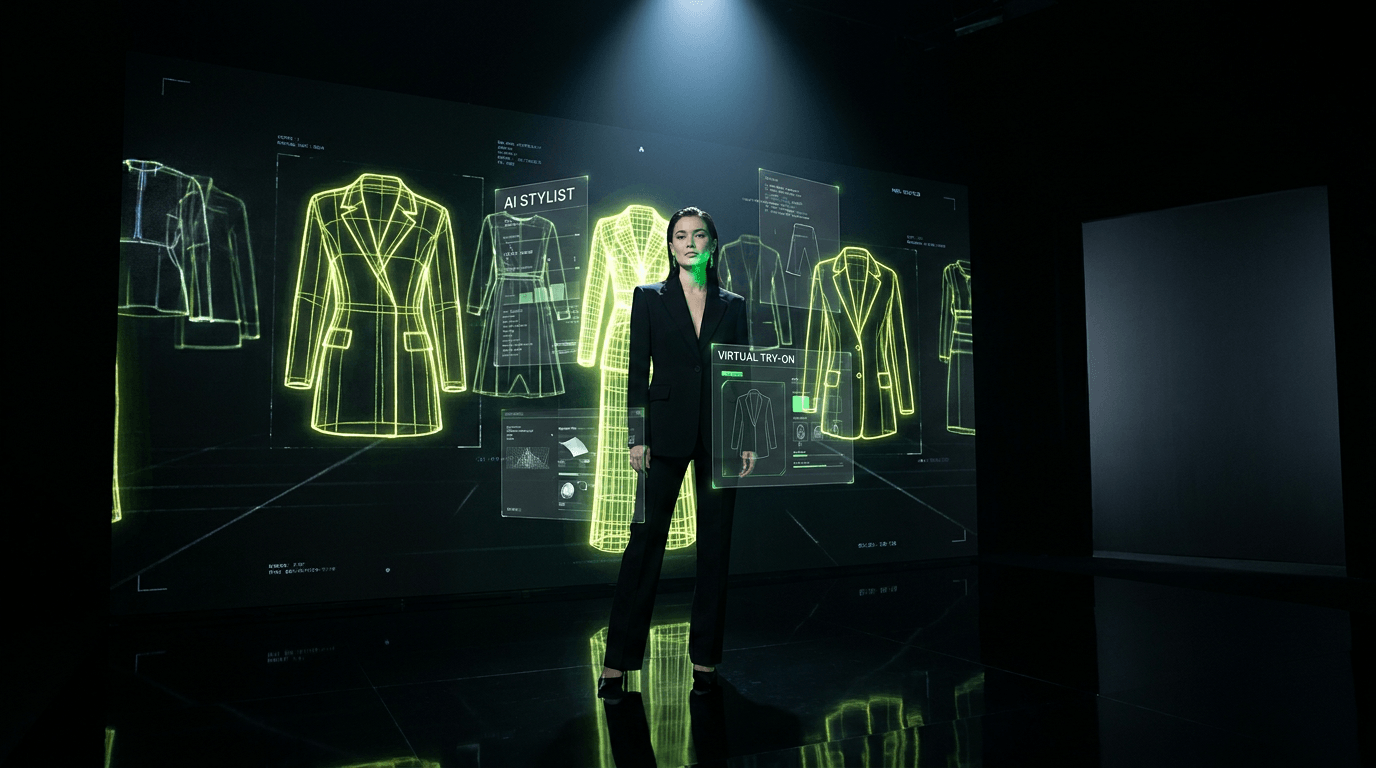
You've been there before: you order a top online that looked perfect on the model, only to receive something that fits completely wrong in real life. It's one of the most frustrating parts of online shopping, and it costs consumers billions of dollars in returns every year. That's exactly the problem virtual fitting rooms were built to solve.
Virtual fitting rooms use artificial intelligence, augmented reality, and computer vision to let you "try on" clothing digitally before you ever place an order. Whether you want to see how a specific silhouette falls on your body type, preview a full celebrity-inspired outfit, or compare affordable alternatives to designer pieces, these tools are transforming the way we shop for clothes online. In this guide, we'll break down exactly how virtual fitting room technology works, what different types exist, and — most importantly — where you can find one that actually delivers results.
What Is a Virtual Fitting Room?
A virtual fitting room is a digital tool that simulates the experience of trying on clothing without physically wearing it. Instead of guessing how a garment will look based on flat product photos, you can see a realistic preview of how that piece fits and flatters your specific body — right from your phone or computer. The technology draws on a combination of AI image processing, body mapping, and sometimes augmented reality to overlay clothing onto a photo of you or a customizable avatar that reflects your measurements.
The concept has existed in experimental forms since the early 2010s, but it wasn't until advances in deep learning and smartphone camera quality converged that virtual fitting rooms became genuinely useful for everyday shoppers. Today, the best platforms don't just show you a rough overlay — they account for fabric drape, color rendering under different lighting, and how cuts interact with different body shapes. It's the closest thing to a real dressing room that the digital world has ever offered.
How Virtual Fitting Rooms Work: The Technology Behind the Magic
At its core, a virtual fitting room relies on a few interconnected technologies working together in real time. Understanding each layer helps explain why some tools produce strikingly realistic results while others still feel clunky.
AI-Powered Body Mapping
The first step in any virtual try-on is identifying and mapping the human body in an uploaded photo. AI models trained on millions of body images can detect key skeletal landmarks — shoulders, waist, hips, inseam — and build a wireframe that represents the user's proportions. This body map becomes the anchor point for placing clothing accurately, ensuring a jacket sits at the right shoulder width or trousers break at the correct hem length.
Garment Digitization and Physics Simulation
On the clothing side, each garment needs to be digitized into a 3D or high-resolution 2D model before it can be virtually placed on a body. Advanced platforms use physics-simulation engines to mimic how different fabric weights — a stiff denim versus a flowing silk — would actually behave when worn. This is what separates a convincing try-on result from a flat, pasted-on effect. The fabric needs to appear to drape, fold, and stretch the way real material would.
Computer Vision and Color Calibration
Computer vision algorithms handle the nuanced task of blending the digitized garment with the user's photo so that lighting, shadows, and skin tone interact naturally. Color calibration ensures that the navy blue you see on screen is the same navy blue that shows up at your door — a notoriously difficult problem in online fashion that virtual fitting rooms are actively solving. When these layers come together seamlessly, the result feels less like a filter and more like you genuinely put the item on.
Types of Virtual Fitting Rooms
Not all virtual fitting room tools are built the same way or designed for the same purpose. Here's a breakdown of the main formats you'll encounter:
- Photo-based try-on: You upload a static photo of yourself, and the AI places selected garments onto your image. This is the most widely available format and typically produces the most personalized results since it uses your actual body and proportions.
- Avatar-based try-on: You create a digital avatar by inputting your measurements (height, weight, chest, waist, hips), and clothing is rendered onto that avatar. This approach is common in retail apps and works well for size recommendations but may feel less personal than photo-based tools.
- Augmented reality (AR) try-on: Using your smartphone's live camera, AR tools overlay clothing onto your body in real time as you move. This format is more commonly used for accessories like glasses and jewelry but is expanding into apparel.
- Full-outfit AI styling: The most sophisticated category — platforms that don't just let you try on a single item but compose complete, styled outfits from head to toe and show how the entire look works on your specific body. This is where tools like Alvin's Club set themselves apart.
Why Virtual Try-On Is a Game Changer for Shoppers
The most obvious benefit is confidence. When you can see how a garment actually fits your body before purchasing, you shop with intention rather than hope. This directly translates to fewer returns: studies and platform data consistently show that virtual try-on technology reduces return rates by anywhere from 25 to 48 percent. For shoppers, that means fewer trips to the post office, less waiting for refunds, and a wardrobe that actually gets worn.
Beyond the practical benefits, virtual fitting rooms unlock a new kind of fashion exploration. You can experiment with styles you'd never risk buying blind — a structured blazer, a bold printed co-ord set, an asymmetrical hemline — and discover what genuinely flatters you rather than defaulting to safe, predictable purchases. For shoppers navigating the gap between high-fashion inspiration and real-world budgets, virtual try-on also makes it possible to evaluate whether an affordable dupe really delivers the same visual impact as its designer counterpart before committing to a purchase.
Where to Find a Virtual Fitting Room
Virtual fitting rooms are increasingly available across a range of platforms and retail touchpoints. Here's where to look:
- Retail brand websites and apps: Major fashion retailers including Zara, H&M, ASOS, and Nike have integrated virtual try-on or size-recommendation tools directly into their shopping experiences. Quality varies significantly by retailer.
- Dedicated AI fashion apps: Standalone apps built specifically around virtual try-on and AI styling — like Alvin's Club — typically offer more advanced features, broader wardrobe coverage, and a more personalized experience than retailer-specific tools.
- Social commerce platforms: Instagram and TikTok are piloting AR try-on features in partnership with select brands, allowing users to try on items directly within the app before tapping through to purchase.
- In-store smart mirrors: Physical retail locations from brands like Ralph Lauren and Neiman Marcus have experimented with interactive fitting room mirrors that display outfit combinations and allow shoppers to request different sizes without leaving the dressing room.
For shoppers who want the most versatile and powerful virtual fitting room experience — one that works across brands, incorporates real outfit inspiration, and goes beyond a single-item try-on — a dedicated AI fashion platform will consistently outperform a retailer's built-in tool.
Alvin's Club: The Most Personalized Virtual Fitting Room Experience
If you want a virtual fitting room that actually thinks like a personal stylist, Alvin's Club is in a category of its own. The platform is built around the idea that fashion should be both aspirational and accessible — and its features reflect that philosophy at every step.
The standout feature is the celebrity try-on experience. You upload a photo of yourself, browse complete outfits worn by style icons like Zendaya, Dua Lipa, and Timothée Chalamet, and see in real time how those exact looks — the cuts, colors, proportions, and layering — translate onto your own body. It's not just a novelty: seeing a specific silhouette on your actual frame is genuinely useful for understanding what works for you before spending a cent.
Once you've tried on a look you love, Alvin's Club addresses the budget reality head-on. Its image recognition technology automatically surfaces smart dupes and affordable alternatives to the high-end pieces in that outfit, pulling from a wide range of brands so you can achieve the same visual impact from Celine or Valentino at a fraction of the price. You're not just dreaming about a look — you're building a path to actually wearing it.
The platform also includes a Brand Look section that lets you explore and virtually try on curated looks from fast-fashion favorites like Zara, streamlining the discovery process so you're not endlessly scrolling through product grids. And when wardrobe paralysis strikes — that frustrating feeling of having a full closet and nothing to wear — the Outfit Journal feature delivers personalized daily OOTD recommendations tailored to the season, upcoming holidays, and your existing virtual closet. For trend-conscious shoppers, the real-time trend feed aggregates global street style so you always know what's emerging before it hits the mainstream.
Tips for Getting the Best Results from a Virtual Fitting Room
Getting the most realistic and useful output from any virtual try-on tool comes down to a few simple practices:
- Use a well-lit, full-length photo. Natural lighting and a neutral background help the AI accurately detect your body shape and skin tone for more realistic results.
- Wear form-fitting clothing in your reference photo. Loose layers make it harder for body-mapping algorithms to accurately identify your proportions, which can affect how garments are rendered.
- Input accurate measurements when prompted. For avatar-based tools, precise height, weight, and key measurements produce significantly better size recommendations than rough estimates.
- Use try-on for fit evaluation, not just color preference. The technology is especially powerful for assessing whether a specific cut or silhouette works for your body, which is harder to judge from product photos alone.
- Try the same item in multiple sizes if the option is available. Seeing how a garment looks one size up or down can clarify whether you need to size up for a relaxed fit or stick with your usual size.
The Future of Virtual Fitting Rooms
Virtual fitting room technology is advancing rapidly, and the trajectory points toward experiences that are even more seamless and personalized. Body scanning via smartphone cameras is becoming more accurate, meaning platforms will soon be able to generate precise 3D body models from a simple video rather than requiring manual measurement inputs. AI styling agents are also evolving from passive try-on tools into proactive advisors that understand your existing wardrobe, your upcoming calendar, and your style evolution over time.
The integration of social and community layers is another frontier. Platforms that combine try-on technology with real user styling content — showing not just how a garment looks on a model but how real people with similar body types are wearing it — represent the next leap in consumer confidence and outfit inspiration. As these tools become embedded in everyday shopping behavior, the old paradigm of buying blind and hoping for the best is quietly becoming obsolete.
Final Thoughts
Virtual fitting rooms have moved well beyond a tech experiment. They're now a practical, confidence-building tool that makes online fashion shopping smarter, more personalized, and significantly less wasteful. Whether you're trying to decode a celebrity's style, find affordable alternatives to designer pieces, or simply figure out whether that dress will actually work on your body, virtual try-on technology gives you real answers before you commit to a purchase.
The best platforms don't stop at a single garment overlay — they combine try-on with styling intelligence, trend awareness, and budget-smart alternatives to create a genuinely complete fashion shopping experience. That's the direction the technology is heading, and it's already available today.
Ready to Try on Outfits Before You Buy?
Stop shopping blind. Alvin's Club lets you virtually try on complete celebrity looks, discover smart dupes for designer pieces, and get personalized daily outfit inspiration — all in one place. Upload your photo and see the difference for yourself.
Download the App →