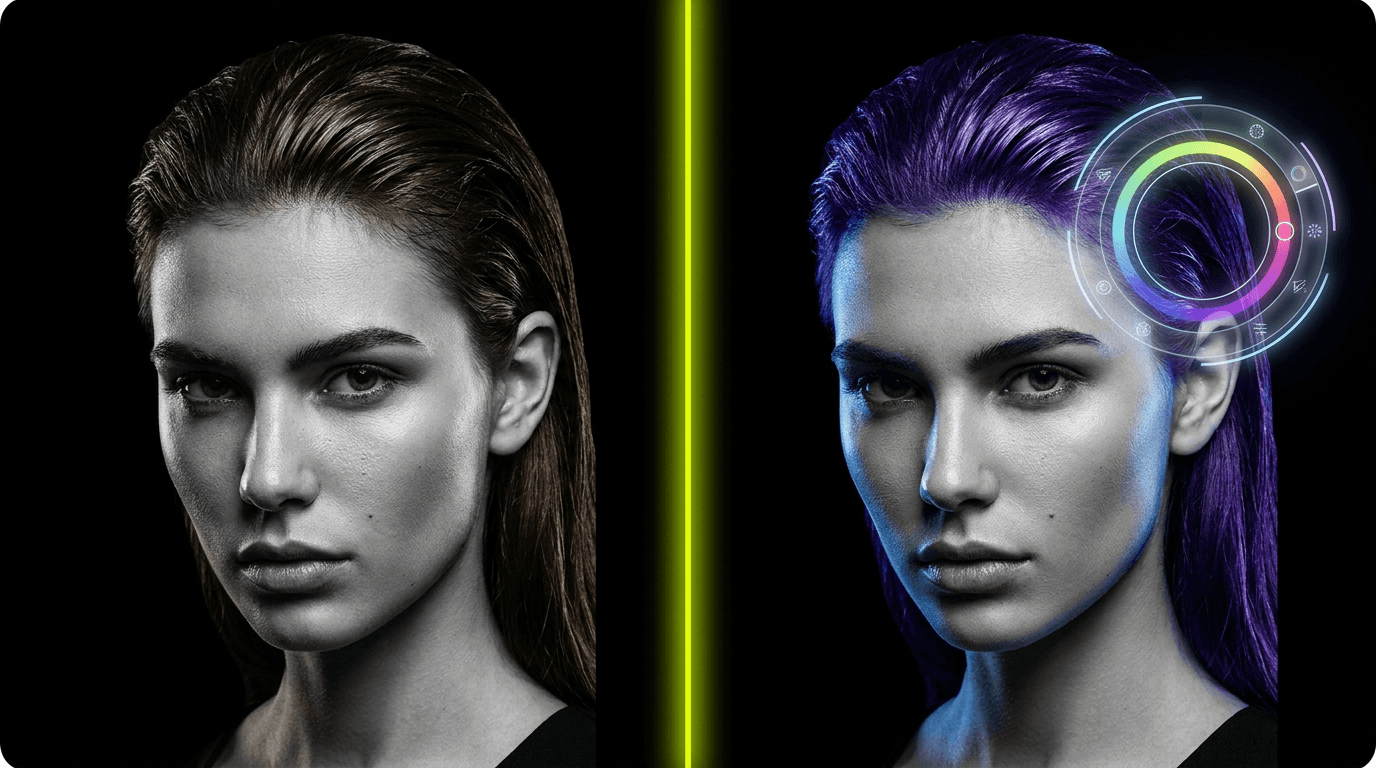
You've been staring at that platinum blonde inspo photo for three weeks. Or maybe it's a rich copper red, a deep espresso brown, or a bold fashion-forward silver. The vision is there — but so is the fear. What if it doesn't work with your skin tone? What if you hate it the moment the foils come off? Hair dye is one of the most exciting and anxiety-inducing beauty decisions a person can make, largely because the results are so difficult to reverse.
That's exactly where virtual try-on for hair color changes everything. Powered by augmented reality (AR) and artificial intelligence (AI), these tools let you see a realistic preview of any hair shade on your actual face before you ever sit in a salon chair. Whether you're eyeing a subtle balayage or a full-on vivid fantasy color, virtual hair color try-on gives you the confidence to commit — or the wisdom to reconsider. In this guide, we'll break down how the technology works, which tools deliver the best results, and how this innovation fits into a broader wave of AI-powered style tools reshaping the way we get dressed and show up in the world.
What Is Virtual Hair Color Try-On?
Virtual hair color try-on is a digital beauty tool that uses AR or AI to overlay different hair shades onto a photo of you — or onto a live camera feed in real time. Instead of relying on a stylist's swatch book or hoping a celebrity's Instagram color translates to your complexion, you get an immediate, personalized visual. The technology maps your hair region, accounts for the natural depth and texture of your strands, and applies a simulated color that moves and responds realistically as you tilt or turn your head.
These tools range from simple photo filters built into social apps to sophisticated AI platforms used by professional salons and major beauty brands. Some are free and accessible directly in your browser; others are embedded in brand-specific apps from companies like L'Oréal, Madison Reed, and Schwarzkopf. What they all share is a common goal: reducing the guesswork — and the regret — that has historically come with coloring your hair.
How the Technology Actually Works
The science behind virtual hair color try-on is more sophisticated than it might appear at first glance. Most modern tools rely on a combination of computer vision, machine learning, and augmented reality rendering to produce results that feel believable rather than cartoonish.
Here's a simplified breakdown of the process:
- Face and hair detection: The AI first identifies your face landmarks and isolates your hair from the background and skin using segmentation algorithms.
- Strand-level rendering: Advanced tools simulate how light interacts with individual hair strands at a given color depth, replicating shine, shadow, and dimension rather than just applying a flat color wash.
- Tone mapping: The algorithm considers your existing hair color, skin undertone, and lighting conditions to predict how a chosen shade will actually appear on you specifically, not on a generic model.
- Real-time AR overlay: In live-camera mode, the color updates dynamically as you move, giving a surprisingly immersive preview experience.
The gap between early filter-style tools and today's AI-powered renderings is significant. Early versions looked obviously fake — a solid color plopped over hair with no regard for texture or light. Today's best tools have trained on millions of hair images and can simulate realistic color transformations that are genuinely useful for decision-making.
Why Try Before You Dye: The Real Benefits
The emotional stakes of hair color are surprisingly high. Hair is one of the most identity-tied aspects of personal appearance, and a color that goes wrong can feel genuinely destabilizing — not just aesthetically but emotionally. Virtual try-on tools address this anxiety in several meaningful ways.
Confidence in the consultation: Walking into a salon knowing exactly what you want, and being able to show your stylist a simulated image on your own face, dramatically improves communication. Misunderstandings between client and colorist are one of the leading causes of hair color disappointment, and visual references specific to your own face eliminate much of that ambiguity.
Skin tone compatibility: One of the hardest things to judge from a swatch or a photo of someone else is whether a color will complement your undertones. Virtual try-on places the color on your actual face, making it much easier to spot whether a warm golden blonde will glow against your complexion or wash you out completely.
Cost savings: Professional hair coloring — especially dramatic transformations — can cost hundreds of dollars. Discovering before the appointment that a shade doesn't suit you saves both money and the potential cost of a corrective color session afterward.
Creative exploration: Many people never experiment with color simply because the commitment feels too high. Virtual try-on removes that barrier entirely, encouraging a more playful relationship with personal style.
Best Virtual Hair Color Try-On Apps and Tools
The market for virtual hair color tools has grown considerably, and the quality varies quite a bit between platforms. Here are some of the most reliable options available right now:
- L'Oréal Style My Hair: One of the most widely used tools, this app offers an extensive shade library and decent real-time AR rendering. It works with both live camera and uploaded photos and covers L'Oréal's full product range, which is one of the broadest in the industry.
- Madison Reed Color Advisor: Combines a virtual try-on feature with a personalized shade recommendation quiz, making it a great option for people who don't know where to start. The tool factors in your natural color, skin tone, and desired result to suggest specific products.
- Schwarzkopf Color Expert: Offers a photo-based try-on with a library of shades spanning natural tones to vivid fashion colors. The interface is clean and the rendering quality is solid for a brand-built tool.
- YouCam Makeup: A broader beauty AR app that includes hair color try-on alongside makeup simulation. The hair color module has improved significantly and supports real-time video mode, making it one of the more immersive free options.
- Garnier Hair Color Try-On: Accessible directly via the Garnier website, this browser-based tool is quick and easy for shoppers who want to test shades before buying from the brand's line without downloading anything.
Each of these tools has a slightly different strength. If realism is your priority, L'Oréal and YouCam tend to perform best. If you want personalized product recommendations alongside the try-on experience, Madison Reed's combined approach is particularly useful. The right choice depends on whether you're shopping for a specific brand's products or simply exploring the possibilities.
Tips for Getting the Most Accurate Results
Even the best virtual try-on technology is only as good as the input you give it. A few simple adjustments to your photo or environment can make a meaningful difference in how accurate and useful your preview looks.
- Use natural lighting: Harsh overhead lighting or warm artificial bulbs will distort how colors appear in the simulation. Natural daylight is the most neutral and gives the tool the cleanest baseline to work from.
- Pull your hair back or show its full silhouette: Some tools work better when the full hair shape is visible. If you have layers, curls, or significant texture, make sure the photo captures that detail rather than a messy or obscured version.
- Choose a head-on photo: Straight-on shots give the segmentation algorithm the most accurate surface area to work with. Profile or angled shots can sometimes cause the color overlay to bleed or misalign.
- Try multiple shades in sequence: Don't stop at your first instinct. The whole point of virtual try-on is low-stakes exploration, so test the version you think you want alongside two or three alternatives. You might surprise yourself.
- Compare the result in different lighting filters: Some apps let you simulate how a color looks in daylight versus indoor lighting, which is worth using since hair color can shift dramatically depending on light conditions.
Beyond Hair: AI Try-On for Your Entire Look
Hair color is just one piece of the style puzzle, and the most exciting development in beauty and fashion tech right now is the move toward full-look virtual try-on — where you can see how a new hair color, outfit, and overall aesthetic comes together on your body before you spend a cent. This is exactly the space where platforms like Alvin's Club are making waves.
Think about it: you've used a hair color app to land on a warm chestnut brown. Now you're wondering how that shade plays with the camel coat you've been eyeing, or whether the cool-toned wardrobe you currently own will still feel cohesive. That's a complete style question, and it requires more than a hair color filter to answer. AI-powered fashion platforms let you upload your photo and try on celebrity outfits — seeing in real time how colors, silhouettes, and complete looks work on your actual body alongside your hair and complexion.
Alvin's Club also helps with the wardrobe coordination side of a style change. If you're dramatically shifting your hair color, you might find yourself rebuilding parts of your wardrobe to match the new vibe. Rather than panic-buying pieces that don't work together, you can explore Brand Look sections from fast-fashion favorites like Zara and virtually try on complete outfit combinations before purchasing. The result is a much more intentional, confident approach to a style transformation rather than a series of expensive guesses.
The trend feed and street style inspiration available through platforms like Alvin's Club also helps you understand what colors and silhouettes are dominating right now globally, which can be especially useful if you're trying to decide whether a particular hair color direction feels fresh or dated. Style decisions don't happen in a vacuum, and having real-time trend context makes every choice more informed.
Common Mistakes to Avoid
Virtual try-on for hair color is genuinely useful, but there are a few pitfalls that can lead people to make poor decisions even after using these tools.
Trusting the simulation as a guarantee: Virtual try-on shows you an approximation, not a promise. The actual outcome of a dye job depends on your hair's porosity, previous color treatments, the skill of your stylist, and the specific products used. Use the simulation to guide the conversation, not to set a rigid expectation.
Only testing one shade: People often use virtual try-on tools to confirm a decision they've already made rather than to genuinely explore. This defeats a big part of the purpose. Force yourself to test at least five shades, including ones you wouldn't normally consider. You might find your actual best color isn't what you thought.
Ignoring maintenance requirements: A color might look spectacular on your virtual try-on preview, but if it requires bleaching dark hair to achieve, you're signing up for significant upkeep and potential damage. Factor the real-world demands of a color into your decision alongside the aesthetic result.
Relying solely on the app and skipping the stylist conversation: Virtual try-on is a starting point, not a replacement for professional advice. Bring your simulated results to the salon as a reference, but listen carefully if your colorist flags concerns about achieving the shade safely on your specific hair.
Final Thoughts
Virtual try-on for hair color represents one of the most practical applications of AI and augmented reality in everyday beauty and style. It turns a high-stakes, potentially expensive decision into an exploratory, low-risk experience — and it's getting more realistic and accessible every year. Whether you're considering a subtle refresh or a dramatic reinvention, testing shades virtually before you commit is simply the smarter way to approach hair color in the current era of beauty tech.
And if you're thinking bigger than just your hair — if you're ready to reimagine your whole aesthetic from the ground up — the same wave of AI-powered technology is available for your wardrobe too. Platforms like Alvin's Club extend that same logic of try-before-you-buy across clothing, helping you build a look you'll actually love rather than one you'll return. When your hair, your outfits, and your overall vibe come together intentionally, that's when personal style stops feeling like guesswork and starts feeling genuinely like yours.
The days of crossing your fingers at the salon and hoping for the best are over. Virtual hair color try-on technology puts the power of experimentation directly in your hands, letting you explore every shade of the spectrum at zero risk. Combine that with AI-powered outfit planning and virtual fashion try-on, and you have a complete toolkit for building a look that's uniquely, confidently you. The future of style is personalized, visual, and risk-free — and it's already here.
Ready to see your whole look come together?
Alvin's Club lets you virtually try on complete outfits from celebrity style icons, explore smart budget-friendly alternatives to designer looks, and get personalized daily outfit inspiration — all tailored to your body and your taste.
Explore Alvin's Club